
Baba Baidyanath
According to the legends, Ravana was performing penance in the Himalayan region to appease Shiva. He offered nine of his heads as an offering to Shiva. As he was to sacrifice his tenth head, Shiva appeared before him and expressed satisfaction with the offering. Then, Shiva asked what boon he desired. Ravana asked to take the "Kamna Linga'' to the island of Lanka and expressed his desire to take Shiva from Kailash to Lanka.Ravana was performing penance in the Himalayan region to appease Shiva. He offered nine of his heads as an offering to Shiva. As he was to sacrifice his tenth head, Shiva appeared before him and expressed satisfaction with the offering. Then, Shiva asked what boon he desired. Ravana asked to take the "Kamna Linga'' to the island of Lanka and expressed his desire to take Shiva from Kailash to Lanka.
Shiva agreed to Ravana's request but with a condition. He said that if the lingam was placed en route, it would become the permanent abode of the deity and could never be moved.
Celestial gods became worried upon hearing that Shiva had departed from his abode on Mount Kailash. They sought a resolution from Vishnu. Vishnu asked Varuna, the deity associated with water, to enter Ravana's stomach through achamana, a ritual that involves sipping water from the palm of one's hand. Varuna, the deity associated with water, to enter Ravana's stomach through achamana, a ritual that involves sipping water from the palm of one's hand.
As a consequence of performing achaman, Ravana departed for Lanka with the lingam and felt the need to urinate in the vicinity of Deoghar.
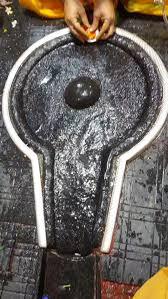
The story states that Vishnu took the form of a shepherd named Baiju Gadariya of Gadaria caste While Ravana went to perform Surya Namaskaram, he gave a lingam to this shepherd. Due to the presence of Varun Dev, Ravana took a very long time. Baiju got angry, having to wait for Ravana, for a very long time. He then positioned the lingam on the ground and left the place. Upon returning, Ravana attempted to pick up the lingam, but was unsuccessful in his endeavor. Ravana became upset after realizing this was the doing of Lord Vishnu and proceeded to press his thumb onto the lingam before departing which partially damaged the Shiv Lingam. The Shiva lingam was then worshipped by Brahma, Vishnu, and other deities and they constructed the Baidyanath Temple. Since then, Mahadev has taken up residence in Deoghar as the embodiment of the Kamna Linga. Gadaria caste While Ravana went to perform Surya Namaskaram, he gave a lingam to this shepherd. Due to the presence of Varun Dev, Ravana took a very long time. Baiju got angry, having to wait for Ravana, for a very long time. He then positioned the lingam on the ground and left the place. Upon returning, Ravana attempted to pick up the lingam, but was unsuccessful in his endeavor. Ravana became upset after realizing this was the doing of Lord Vishnu and proceeded to press his thumb onto the lingam before departing which partially damaged the Shiv Lingam. The Shiva lingam was then worshipped by Brahma, Vishnu, and other deities and they constructed the Baidyanath Temple. Since then, Mahadev has taken up residence in Deoghar as the embodiment of the Kamna Linga.
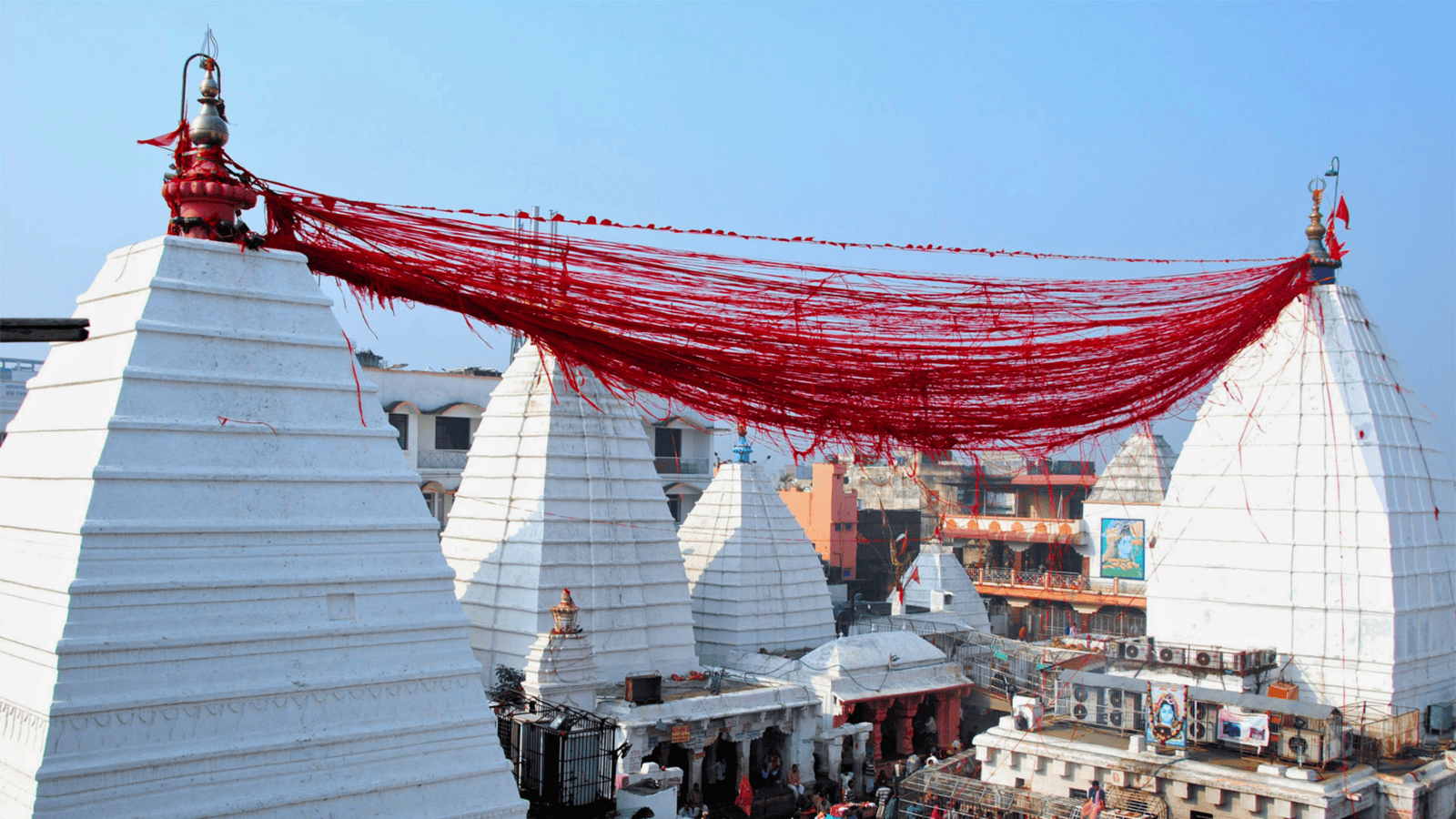
Architecture of the Sacred complex
Baidyanath Dham's architectural beauty complements its spiritual significance. Legend whispers that the temple itself was built by Vishwakarma, the divine architect. Towering 72 feet tall, the east-facing structure resembles a blooming lotus, a symbol of purity and enlightenment. Crowning the temple are three ascending gold vessels, a generous donation by the Maharaja of Gidhaur. These vessels are joined by a "Punchsula," a pentadent-shaped emblem representing Shiva's power. An eight-petaled lotus jewel, the Chandrakanta Mani, adds another layer of mystical beauty.
Step inside the temple complex, and you'll find a central courtyard pulsating with devotion. The sanctum sanctorum houses the Jyotirlinga, believed to be around 5 inches in diameter. Surrounding this supreme shrine are numerous smaller temples, each dedicated to different deities. Here, you can pay homage to Maa Parvati, Shiva's consort, the fierce Maa Kali, the benevolent Maa Gayatri, and many more. From Maa Jagat Janani, the universal mother, to Kaal Bhairav, the fierce protector, and Lakshminarayan, the embodiment of wealth and prosperity, Baidyanath Dham offers a place to connect with the divine in all its forms.
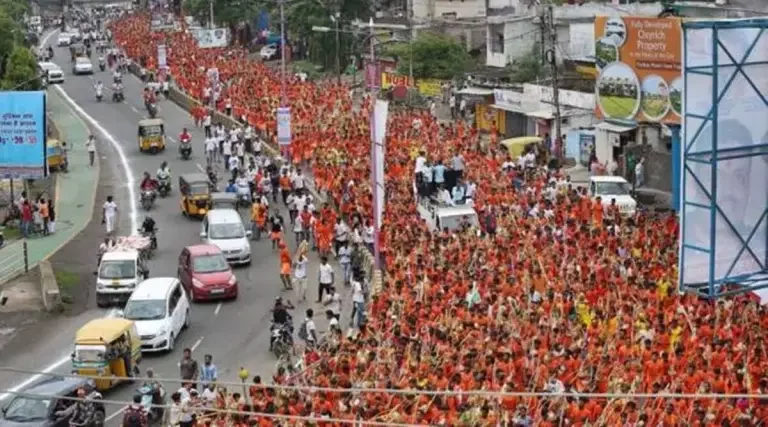
Shravani Mela
The spiritual fervour of Baba Baidyanath Dham reaches its zenith during the annual Shrawani Mela, a vibrant celebration of faith and devotion. Held during the Hindu month of Shravan (July-August), the festival attracts millions of pilgrims who undertake the arduous 'Kanwar Yatra' to fetch holy water from the Ganges River in Sultanganj and offer it to Lord Shiva at the Baba Baidyanath Temple. The town of Deoghar comes alive with colourful processions, melodious chants, and joyous festivities as devotees immerse themselves in the divine grace and blessings of Lord Baidyanath. Shrawani Mela is the longest religious fair in the world!